

|
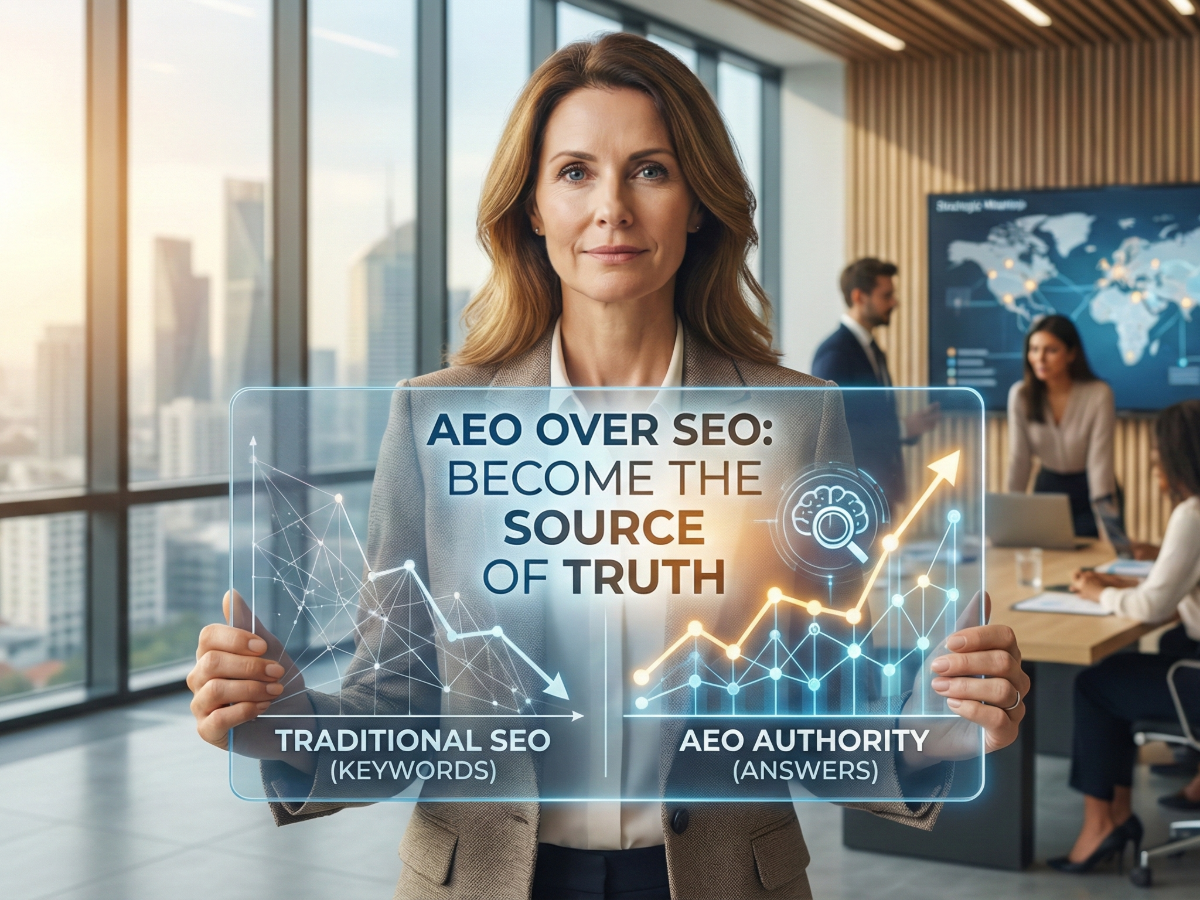
Keyword wrangling is functionally over. Over the years, we’ve all been following a static B2B playbook: identify a high-volume search term, produce content that aggressively targets it, and wait for the traffic to come. But if your content strategy is still built around ranking for singular, isolated phrases, you’re quickly becoming invisible to your most valuable prospects. We’ve transitioned from a lexical approach where search engines clumsily matched strings of text, to a semantic era driven by AI and LLMs. Today, when a B2B decision-maker types a query into Google or asks an AI assistant a question, the engine deconstructs the entire intent behind them. It aims to understand the context, nuance, and the inevitable follow-up questions the user hasn't even asked yet. AI compounds the increasing complexity of the B2B buying journey itself. Buyers are fiercely independent researchers. Per Gartner, B2B buyers spend only 17% of their purchase journey meeting with potential suppliers. The majority of their time is spent on independent online research, trying to solve complex problems themselves. If your content only scratches by targeting a single keyword, it fails to serve these self-educating buyers. The significant opportunity today is about covering the full scope of the buyer's inquiry the way AI actually understands it. To win in this new landscape, we must stop writing for keywords and start writing for intent layers. The Problem with Legacy B2B ContentThe best way to think about this concept is: content that targets a single keyword inevitably answers a single question. It’s linear, surface-level, and heavily reliant on the outdated assumption that a buyer will patiently click through a carefully orchestrated marketing funnel to get the rest of their answers. However, modern B2B buyers don’t follow linear funnels, especially when evaluating complex solutions on a global scale. They’re navigating chaotic purchasing environments. Over 40% of B2B deals stall completely due to internal misalignment within buying groups. These buying committees are sprawling, often involving hidden influencers in finance, legal, or operations who will never agree to take a sales call. When a marketer produces a surface-level, 500 word article optimized for a single term, it might attract an initial click. But it fails to equip that researcher with the depth of information they need to build consensus among those hidden stakeholders. Buyers are deeply frustrated by this superficiality. Gartner’s 2025 data indicates that 61% of B2B buyers now prefer an entirely rep-free buying experience. Similarly, recent data from 6Sense indicates that buyers have already defined their purchase requirements 83% of the time before ever speaking with a sales representative. If your content isn't anticipating the subsequent intent layers, like the technical integrations, the financial ROI, the implementation risks, and the specific global use cases, then your buyer will just leave your site to find a competitor who will. Legacy SEO content forces buyers to piece together a fragmented puzzle on their own. Intent-layered content, however, hands them the completed picture, doing the heavy lifting of the sales team before the buyer ever reaches out. How to Map Intent Layers for B2B TechSearch algorithms and, crucially, human evaluation committees, look for the complete narrative. To pivot from legacy keyword strategies to intent layers, marketing leaders must deconstruct their core topics into a multidimensional framework. Let’s say the initial buyer query is: "How to scale enterprise AI deployment." The legacy keyword approach dictates writing a top-level summary about AI scaling. The intent-layer approach, however, requires you to map the hidden, unarticulated questions the diverse buying committee is actually asking:
Building content that systematically addresses each of these layers enables you to stop competing on search volume alone and start competing on buyer enablement. You transform a basic article into a comprehensive, authoritative asset that actively guides the buyer through their internal consensus-nurturing process. Awards are the Validation Layer of Buyer IntentYou’ve mapped the functional, financial, risk, and operational layers. But in the modern, complex B2B buying journey, there is one final, critical layer of intent that standard marketing content alone cannot satisfy: Validation Intent. When a diverse buying committee is on the verge of a massive technological investment, their final unspoken question is always, "Who else trusts this?" They’re actively searching for objective, third-party validation to de-risk their decision and justify the purchase to their board. This is where industry awards become critical commercial assets. A prestigious, globally recognized award, such as a Microsoft Partner of the Year or a Stevie Award, acts as an indisputable trust signal. It instantly satisfies that final layer of buyer intent, proving to the buying committee that your solution is a vetted, celebrated standard of innovation. However, winning at that global level requires the exact same intent-mapping strategy we've applied to your content. Judges aren't looking for feature sets; they’re evaluating the multi-layered narrative of your technological impact. At Orange Bridge, we engineer the narratives that secure this final layer of buyer validation. We partner with technology organizations to audit their entire recognition agenda, identifying the gaps where their true intent and impact aren't shining through. From there, we build a comprehensive, year-long award roadmap and execute the high-stakes submissions required to win. Don't leave your most critical layer of buyer intent to chance. Let's build the narrative that proves your authority.
|